
Two Modes of AI Transformation
by Esben Toftdahl Nielsen, Co-Founder / CEO
Most organisations are approaching AI transformation in one mode. They should be running two.
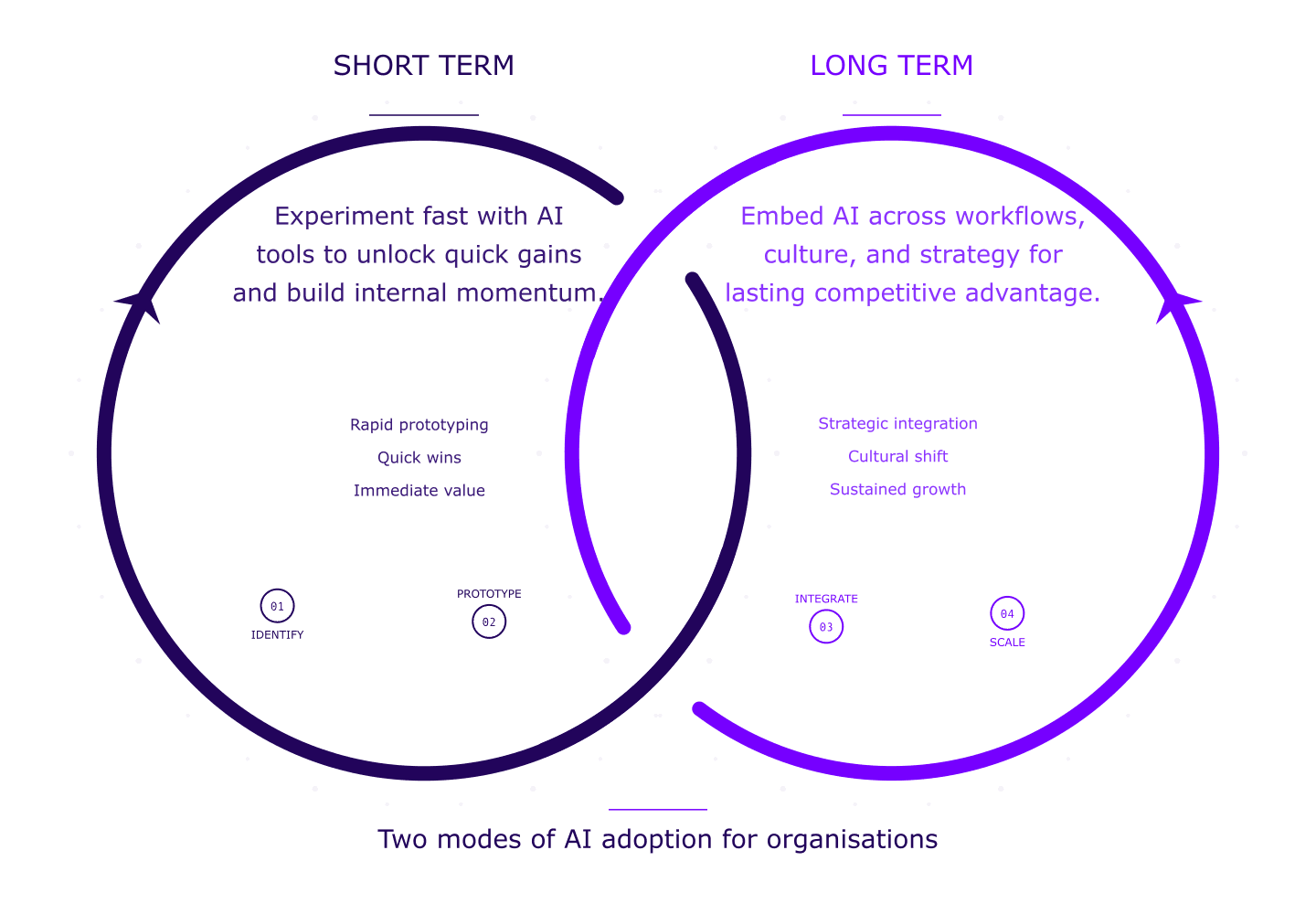
There is the tactical mode, driven by AI use cases, early wins, and automating processes. This mode brings real value, and it is an important mode to be in because organisations learn by doing. That learning informs everything else.
But something significant has happened in the past few months. With agentic AI, we are getting a glimpse of a future where near-limitless intelligence is available at potentially very low cost. That does not just change the tools available. It challenges the fundamental logic of how organisations create value and compete.
Beyond tasks
It is no longer just about which tasks AI can help with. The real question is what your organisation looks like when intelligence is effectively unlimited.
How do you create value for your customers? What does your operating model become? Who do you serve in a world where your competitors have access to the same intelligence you do?
That is the strategic mode. And it cannot wait until the tactical work is done.
Why both modes need to run in parallel
The two modes are connected. Each one makes the other more effective.
The tactical work builds the competence and confidence to know what is actually possible. The strategic redesign gives the tactical work a direction worth moving toward. Without the first, strategy floats free of reality. Without the second, you accumulate AI activity without redesigning the organisation for the future.
Organisations that run both modes at the same time make better decisions in both. Those deferring the strategic conversation are not saving time. They are reducing their options of being competitive in the future.
The tactical mode: building capability
The tactical mode is where most organisations start, and rightly so. It focuses on identifying and prioritising AI use cases, designing scalable solutions, implementing them, and documenting the value they create. Over time, this becomes a cycle of anchoring the solutions across the organisation, optimising, and developing further.
This is where the organisation builds its muscle memory for working with AI. Every pilot, every deployment, every lesson learned feeds into a deeper understanding of what works and what does not.
The strategic mode: redesigning for the future
The strategic mode operates on a different level. It starts with a fundamental question: how does AI change our industry, our position in it, and the way we should operate?
From there it moves into developing a future-proof strategy with AI at the centre, defining and establishing a new operating model, and leading the cross-cutting transformation that follows. This is not an incremental effort. It is a deliberate redesign.
The connection between the two
The two modes are not independent workstreams. They form a feedback loop.
Long-term strategic thinking should steer the short-term tactical initiatives. At the same time, the lessons and capabilities built through tactical work feed directly into making the strategic vision realistic and grounded.
Without this connection, organisations risk either building castles in the air or running efficiently in the wrong direction.
The window is open
The window to redesign your organisation as a deliberate choice is open. How long it stays open is uncertain. The pace of AI development means that the organisations moving on both fronts now will have a meaningful advantage over those that wait.
This is not about doing more. It is about making sure the work you are already doing has a strategic destination.